
Meta Muse vs Amazon, Anthropic’s Wet Lab, and Trump’s new world of SI
YouTube will ask you to confirm your subscription.
About this episode
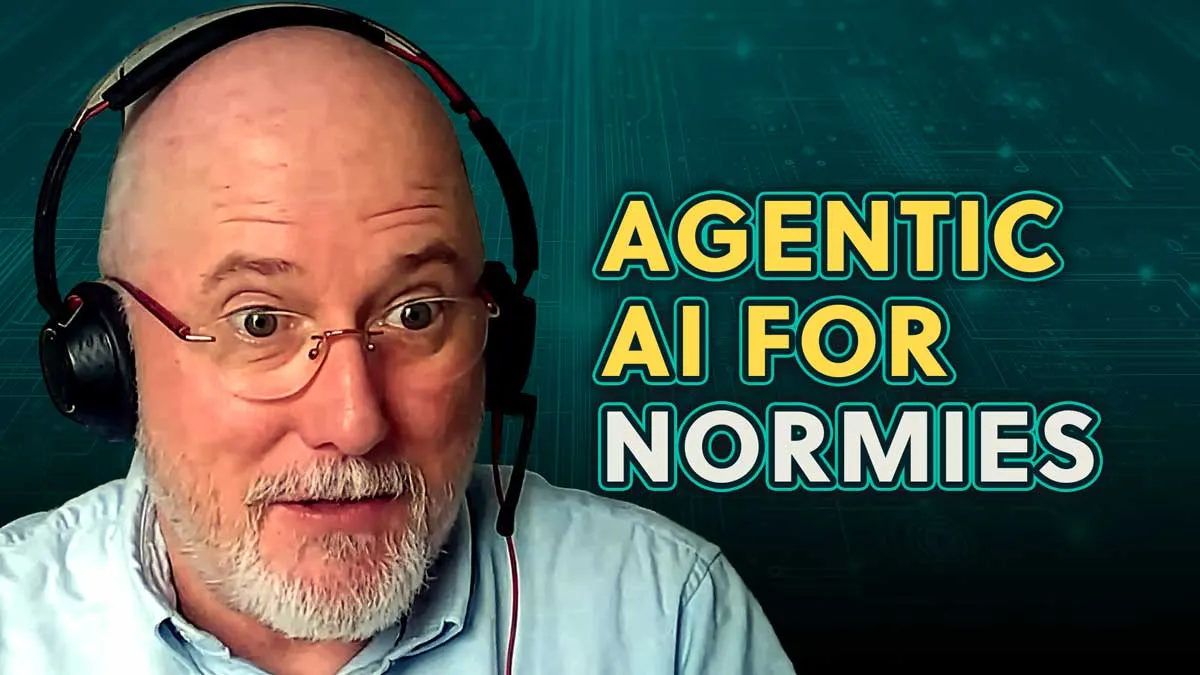
Meta’s Muse is an easy-to-use AI agent that lets people who aren’t techies book trips, shop, and get things done. Justin also thinks it could help small local sellers compete with Amazon. Frank worries about what Meta could learn about its users—and whether shops would lose their direct relationship with customers.
Plus: Claude 5.5 and GPT-6 get cheaper, while ChatGPT’s model picker frustrates Frank. Google tests a GPU in space, Anthropic sets up a wet lab, and Trump declares the age of superintelligence.
JOIN THE ARGUMENT
Could AI shopping agents help small retailers without weakening their customer relationships?
Sources
- Anthropic releases Opus 5.5 with lower prices and Fable-level performance
- OpenAI launches GPT-6 Sol and Luna, boasting lower cost and fewer mistakes
- Google’s first Suncatcher orbital data-center test launches October 1
- Meta debuts its Muse AI agent. Will consumers trust it?
- Meta Muse partners with Shopify, gets blocked by Amazon
- Anthropic says its biology lab has already found something big
- OpenAI forms math advisory group as its AI resolves more than 100 open problems
- Trump says he’s renaming AI to SI: ‘Super Intelligence’
Key insights
When an AI agent is effortless, what do we hand over?
Meta’s Muse is designed so ordinary people can delegate tasks without wrestling with technical setup. That’s its appeal. Frank’s worry is that each useful result could make the next permission easier to grant. You might begin with shopping and end up sharing more of your life with Meta than you intended.
Could shopping agents help small retailers but weaken their relationships?
Justin sees a route around Amazon: an agent could find local goods without making shoppers do the legwork. Frank sees a cost for sellers. An agent may bring a sale, but it could also remove the store visit, the chance to show other products, and the direct relationship that brings customers back.
How fast should AI move into the wet lab?
Anthropic says Claude helped identify an enzyme system with similarities to CRISPR, while people carried out the physical experiments. Justin sees a path to faster discoveries for serious diseases. Frank wants humans to keep that hands-on role, even if it slows things down. How much speed is worth trading for that safeguard?
TranscriptThis transcript was generated with AI and may contain errors.Read full transcript
Justin: Hello. Good morning, good afternoon, good evening, and welcome to the AI Argument. Joined as ever by the ever cautious, ever careful, ever steady Frank Prendergast. Afternoon, Frank. How you doing?
Frank: How’s it going?
Justin: That’s great. And the realist stroke optimist, me, Justin Collery.
Did Claude and GPT just get better for less?
Justin: So look, another– We had a bit of a slowdown last week.
The slowdown has been paused, so there’s no slowdown now. The slowdown’s going fast again. Um, so let, let’s just have a quick look at what’s going on this week. We got loads of model releases. Claude 5.5, the one that I’m most excited about. This one– Let me tell you a quick story about this one, right? My wife used Claude 5.5 by accident this week, and I got a phone call saying, “Justin, what the hell is going on with Claude?
This thing is amazing. It just made lo– It, it’s brilliant.” Not only is it brilliant, it’s 20% cheaper, it’s faster, and it’s as clever as Fable, the previous one. So well done, Anthropic. They’re doing great, and they’re giving out free credits, which you can store up. They’re sort of stealing the thunder of OpenAI.
Um, uh, OpenAI, speaking of them, released GPT-6, Sol, and Luna. They’re also better, 50% cheaper, whatever, one million input, output tokens, whatever. Fantastic.
Why is ChatGPT’s model picker a mess again?
Frank: Let me just jump in here to have a quick rant, right? ’Cause I’m, I’m an, I am a ChatGPT user, and do you remember there– there was– uh, this is going back a while now. It just got insane in, in ChatGPT. There was models all over the place. You couldn’t figure out the names of the models. They all had their own names, and they had their own numbers, and that…
It, it was a mess. And they acknowledged it, they realized it, and they did, they did a lot to improve it. They seem to be going backwards again. It’s like it’s impossible to know in the ChatGPT interface what is going on because they’re releasing new models, but then those new models aren’t actually in ChatGPT.
They’re in Codex and Work, but then you– so you have different models. You also have a different model picker. You choose your model differently if you’re in ChatGPT to the way you choose it if you’re in Codex and Work. It is a mess. They need to get their act together on the user interface side. Rant
Justin: All right. OpenAI, sort your shit out. There we go.
Should Google put GPUs in space?
Justin: Okay, in other model releases, and I think it’s actually related to the GPT Sol, Luna, and whatever, and I’ll explain to you why in a second. Uh, Google released some models. Nobody cares. They’re not as good as the other– They’re not as good as the Anthropic and whatever, so nobody cares.
But Google did do something else interesting this week. They are hitching a ride on one of Elon Musk’s rockets to put the first, uh, GPU into space to test if– And, and do you know what it is? The w- what makes me think of it, what makes me think that this is related is because the way that OpenAI are naming their models, you’ve got Luna and Sol and stuff like that, that’s where they should put the inference.
So Luna should have the GPUs, like, on Earth, and Sol should have the, the GPUs circling the sun, and the, whatever the other one is. The Luna one, sorry, should be on the moon. Whatever. You get my idea, right?
Frank: Yeah, yeah. Just
Justin: They should name the models after where the inference is.
Frank: Excellent. Yeah, yeah, yeah. At least, at least it would be some kind of logic
Justin: Cool. And we also then had a discovery, which we’re gonna talk about a little bit later, where, uh, and this isn’t dangerous at all, I’m totally fine with it, where Anthropic now have a wet lab. They’re doing tests on, like, real stuff, right? They’re sort of bridging that gap between data center and reality, and they’ve found a new sort of sequence within DNA, which is a bit like CRISPR, which allows you to change stuff and whatever.
Some scientists are saying this is not a big deal. Other scientists are saying it are– it is. We’ll get into that in a bit more detail later. That’s the Singularity update.
Is Meta’s Muse a big deal?
Justin: But the big news this week, the really big news this week, is from our, you know, not all heroes wear capes. And there are people, you know, as you go through the singularity and, you know, we, we, we sort of go over the edge, people who you might have thought were not heroes, you know, that cometh the time, cometh the man, and it looks like Mark Zuckerberg is the man, because this week, Meta have released Muse, and Muse is the biggest story this week.
It is the most exciting release. It’s the most important release, and I think, I think it’s a big deal, and I think it’s really good. How about you?
Frank: I, I think you’re right. I think it’s a big deal. I will– We don’t have access to it, most
likely because we’re in
Justin: Is that, Frank?
Frank: Most likely because we’re in Europe, and most likely because the regulations are protecting us from a tool that is not ready for consumers for data privacy reasons. That would be my best guess, and I think that’s okay.
I’m okay with that. I’m also okay with it because I would prefer not to use this. Like, if we had access to it, I would’ve, I would’ve felt obliged to test it for the AI argument. However, yeah, I don’t wanna touch it with a barge pole. And you know, I was thinking about this. When we started this show way back when, you know, we were– there was a big focus on, like, you know, everyone was coming to grips with these systems, and people kind of had to be reminded, you know, when you put a prompt in, you’re sending that data to a company.
And so we talked on the show about how, like, you just have to figure out, “Well, which of these companies do I trust?” And the answer for me is none of them But it is a scale. Uh, so I, you know, I still put Google up here. However, I am not a huge fan of their models, so I end up using OpenAI, even though my trust factor with them is lower than Google.
And then I would put Meta way down here, nearly on the ground, and then I, I, I think X is probably underground. Um
What can Meta’s Muse actually do?
Justin: So let’s– Okay, before we go into discussing, ’cause I, I do get, right, the data privacy concerns, right? So let’s just explain quickly what Muse is. So a couple of months ago, we had OpenClaw, which has now been renamed to something else, which was a very autonomous agent which you could offload. Ran on a computer, preferably, could interact with you using text messages and WhatsApp and whatever it was, and you would just tell it to do things, and it would constantly run in the background and do whatever, right?
And it was totally nerdy, and I think if you remember at the time, even I was sort of scared to run this thing because it was so autonomous, and it was very nerdy, and it– you needed to be configured and stuff like that. This Muse from Meta is their version of this. So it is an agent, it runs in the cloud, right?
So you get some, like a little virtual computer from Meta, and you can get it to just do stuff for you. And the stuff that you can get it to do is almost anything. But it’s done for normies, right? So it’s, it’s like that same idea, but it’s for, for people like you and me, right? Not like the deep technical people.
Would you trust Muse to book your flights?
Justin: Now, then let’s go into your, right, the use cases, why people might use it, and why I think it’s great and why you don’t like it from a data point of view, right? The things that people use this for at the start or what the, you know, all the use cases are, this thing is incredible because I wanted to go on holidays for a week, and this thing actually did book my flights.
It did find a good hotel deal. It did do… So it actually crosses the Rubicon of, you know, I think you had a test before, like, would I trust it to buy myself a pair of shoes? This one seems to cross that bar where it’s like, actually, yes. Yes, it does. It, it does seem to do a good job of, you know, looking for the shoes.
Your
Frank: I would, yeah, I would be curious to give it my test, ’cause my test was actually could it, um, book me flights? Because that’s something that people use all the time as an example, but it’s super simple. Like, uh, yes, absolutely it could buy me a flight to, from Cork to London, say, no problem. But could it get me to Lexington, Kentucky?
Because there’s huge permutations there and personal preferences on my part in terms of the layov- the, the length of the layover, the airports, the number of layovers, the airports I stop in. I’m not sure, you know, that it, that, that they’re actually up to that level of reasoning, so that would be interesting.
But I just wanna pop back for a second to the easy-to-use thing, and this is kind of related to the whole user interface ChatGPT side of things as well, because you’re right, this is, like, really, really user-friendly from everything I’ve seen. I’ve been watching a lot of videos, examples of people using it, and everyone is just saying, “Wow, this thing is easy to use, easy to understand.”
And I saw a great tweet on this from a guy called Chris Bakke, and he said, “Meta will continue to be successful because they understand that a winning consumer AI strategy is, ‘Hey, you can use AI to negotiate a good deal on a Peloton through Marketplace, and by the way, we made a silly little AI character with a fluffy butt that, that you can look at on, uh, on your new Meta Tamagotchi.’
Not, ‘Run our open weight model 6.71 on this new Chinese orchestration architecture. Oh, and by the way, it might take your job and kill you. Good luck.’”
Justin: So, all right.
Would you trust Meta with your secrets?
Justin: So let’s go to then, McCoy, I think it’s a good thing, you think it’s a bad thing, and the data concerns, right? So up until now, Me- Meta have only known almost everything about you, right? So they’ve, you, you know, they know who your friends are, they know what you like, they know what pictures you take, all that sort of good stuff, right?
With this, they now also know what it is you want to buy, what it is you like to research, what it is you like to do in your personal life, what it, you know, they get a whole raft of… And interestingly, and this is where, this is where the big sort of crux comes, that’s the interface to your commercial life, right, where you spend your money.
So if you think why is Google, why do they make, you know, $50 billion every quarter? It’s because they know what it is you want to buy, right? And Amazon are the same. Why do Amazon– Half of Amazon’s, Amazon’s revenue comes from advertising on Amazon, from people trying to sell you stuff. The danger with this technology is it disintermediates Google and Amazon from you, the consumer, and that is the thing.
It’s, so this is like, it’s gonna be two, two elephants fighting it out to own the share of what it is that you want to buy. But that also means from a data point of view that they know what it is you want to buy,
Frank: Yeah,
Justin: The bit that you’re worried about.
Frank: It is, it is. Um, it’s a small– I– we might get into this in a minute because there’s the, the Amazon thing is really interesting. Small, uh, possible correction, I think their, their, their advertising revenue is more like about 10%, which is still significant, but I think it’s, I think
Justin: Maybe the overall, sorry. Yes. Okay. Yeah
Frank: But so in terms of the privacy thing, so here’s– like, my concern is this: I don’t trust OpenAI and– but I use them because I love their models. But– So I know that I should not– there are things that I should not put into ChatGPT, but over time, I make these trade-offs constantly for the benefit that I get from the model.
So I start putting in stuff that I know I shouldn’t be putting in, but because I know I can get, uh, a useful output. And I see myself slipping into that trap, and I see myself going deeper and deeper with it, even though consciously I know I don’t really trust them. I do not want that to happen f-for me with Meta, and I think, you know, that tweet is right that, like, they, they, they get it.
They have created something that consumers will love, that’s easy to use. It’s got a good user interface. You don’t need to know half a dozen model names to figure out what to do on the, on the platform. And as a result, you know, that friction is removed. People will use it. People might start using it in a wary kind of fashion, but that system will wear you down.
That cute little furry Tamagotchi character in the top right will be like, “Hey, tell me all of your deepest secrets,” and people will just start giving them. So yeah, I think it’s, I think, yeah, I personally do not want to get sucked in.
Can Muse beat Amazon and back small shops?
Justin: All right, so let me tell you why I think we disagree on this one, right? So after this has been released, there’s been two big camps of companies that are getting on board and companies that are not getting on board. So on one side of this, you know, imagine it as a boxing ring, right? In the blue corner, we have the big, bad Amazon.
So Amazon, a massive retailer. Uh, you know, everything that you buy or a lot of things that you buy these days, it’s just easier to go to Amazon, right? And Amazon have huge pricing power. They have blocked Muse, so Muse will not be able to buy anything from Amazon. In the red corner, in the other side, we have Shopify.
Shopify is the friend of the small business owner, right? The, the artisan creator, the whatever, just the, the, the, the guy who has a business and he’s wanting to sell stuff, right? And doesn’t want to sign up with the big, bad Amazon. Shopify have signed up to Muse, so now all of Shopify is available to you within Muse.
I think this has the potential to shift the power from the big, bad Amazon back to the little guy. So here’s my little story. Here’s my little story, and this is why I think that Mark Zuckerberg doesn’t wear a cape but might be a hero So my issue is I would love to be able to buy local produce. I would love to be able to have an agent, and I’d love to be able to- I would love to be able to do a meal plan, right?
And say, “Lookit, these are the dinners that are…” It’s gonna help me make the meal plan. “These are what we’re gonna eat, eat for the next week.” And I would like for my a- and I’d like to say to my agent, “So long as it doesn’t cost more than, let’s say, 20% over what it would normally cost to get the goods from Tesco or whatever, I’d like you to buy local, please.
I’d like you to get all the stuff from local producers.” And because I have an agent doing it, right, th- the friction for me to do that is now zero, right? The agent just goes and does the work for me. And it will be cool, in fact, if we had little drones that came and delivered stuff for us, and all my stuff just arrived, and it was sourced locally.
Honey is my, my bugbear at the moment. I was trying to buy Irish honey really hard, right? So I think that this creates a method where local producers could actually compete with the bigger producers. And I will suggest one more thing, ’cause I know you love regulation and you think Europe is great. What I would love to see is in order to help the little guys out, why don’t we reduce VAT on local produce?
So have a regulation, ’cause, you know, we both love regulations, that says, “If you are creating produce, and so long as it’s up to standard, and you have a small business, which means you don’t have turnover more than pick a number, right? And so long as you are delivering that product within, let’s say, 50 kilometers of where, of where it was produced, we will charge you zero VAT.”
And what that does is it makes me more likely to buy their stuff, levels up the playing field with the, the big producers, and it’s also good for what we would call, like, the environment, the local economy, local producers, right? All that sort of stuff. This technology potentially opens up a future like that, and my big thing is the future is, is open in front of us, right?
You have to dream what future it is that you want and then make it happen. This technology that our best friend Mark Zuckerberg has created enables that future
Frank: Maybe. But, so I don’t, yeah, I don’t, I don’t trust– I just don’t trust corporations, so, so what we have is we have Amazon saying, “Look, uh, first of all, y- um, Meta did not ask us if we wanted to participate.” Secondly, and this is really interesting, I think, Muse does not identify itself as an agent when it shops on Amazon.
It, it ident- it’s basically the same as the user, it’s using a browser. And thirdly, uh, they have concerns that there might be data privacy issues. Uh, and with Meta, I don’t blame them. Um,
Justin: I like, yeah, I know. I think
Frank: Now are they the–
Justin: Too much.
Frank: Yeah, are they, are these the real reasons they’re blocking Muse? I doubt it. I suspect that Amazon, as you said about the advertising revenue, I think it’s more about that.
I think it’s n- and not just the advertising revenue, but owning the customer and owning the shopping journey, and that includes being able to show people ads. That includes being able to upsell people, cross-sell people, you know, all of the, all of the stuff basically that, um, when a human is browsing, we fall for all these, uh, clever marketing traps, and we spend way more money than we intended to, which an agent won’t do. Then if you look at Shopify
Justin: Not to love?
Frank: If you look at Shopify, they’re saying, “Yeah, come on in.” They’re saying, “We’ve actually, we’ve actually built a, a gateway for you to come in. You don’t have to browse at all. You just come in through the back end and you can browse the entire Shopify catalog of all of our store owners.”
And maybe that’s good, but Shopify are probably looking at, like, the huge volume that this sales channel gives to them. But if you drill down then to the store owner level, do they not have all the same concerns about upselling, cross-selling, getting that marketing email from somebody, the brand exposure, et cetera?
Like, Shopify’s not really gonna care about any of that, and so the question will become for the store owner… Now, I will give Shopify credit where credit is due. They’ve opted everyone into this by default, but you can opt out and you have granular opt-out, and I think these are gonna be really difficult decisions for store owners
Justin: Why would you opt out? Like, why would you want to opt out?
Frank: You might want to opt out because the question for me is, will the individual sales from the agentic channel, uh, will they outweigh the loss of creating a relationship with the customer that, you know, if somebody comes for…
It’s, it’s basically what I was saying, that if someone comes for, say, uh, I don’t know, a 35 euro moisturizer, if they, if it’s a human browsing your site, they might end up leaving with a moisturizer, deodorant, hair gel, shower gel, you know, and suddenly their basket is, is…
Justin: Not, not this consumer.
Frank: But you know, suddenly the basket value is, is much higher than the human actually came in to spend. And as we said, an agent isn’t gonna do that. So the question is: how will it all balance out for the store owner?
Justin: So, so, okay.
Will shopping agents bring back real shops?
Justin: So, and this again is why I think that there’s p- you’ve got to imagine the future that you want, right? You have to, and then you gotta make it happen, right? And so what I would see is you have two types of consumer there, and again, it is possible to make this a good outcome for the people that we want to have good outcomes for.
So there is one type of shopper, you’re gonna lose that trade anyway, right? That’s what I would say. So if you’re selling the stuff online and you want to hold onto it, people are just gonna use agents to shop. So you’re, if you don’t include the agents, you’re just gonna lose that sale anyway. Better take the sale, right?
Just take the sale. And then the, the, the second type of shop that you’re talking about is the more experiential type shop. And what I’m saying is you can, you can, through the use of this technology, it means, look, I just need, you know, I need toothpaste. Go get me toothpaste, right? And you’ll get your toothpaste, right?
You don’t really care. But let’s say then it’s a Saturday afternoon, and because your agents have given you loads of free time, you say, “Look, I’d like to go do a bit of shopping,” right? Now it’s experiential shopping, and what you’re doing is a good thing because you’re splitting the online shop, which your agent is going to do now, and you are promoting people to actually go out and shop in shops.
So the experience is going to the shop. Then you can get the upsell. Then you can go and buy all the different products and a cup of tea and whatever it is, which we’ve lost, especially since COVID, right? People don’t go out and shop anymore. They just get stuff on Amazon. So I’m totally happy to see that part of the shopping, you know, killed off with agents in favor of the experiential shopping, which is you go out and you actually do the shop yourself, and it’s gonna be like going to a bazaar in bleeding Marrakech where people are trying to sell you stuff, and it’s like, for people like me, it’s very uncomfortable.
Frank: I, I don’t– Yeah, I, I, I, I, I like this optimistic view that we might come back to experiential shopping as a kind of a community-based activity, but, um, I, I don’t… I, I’m not quite seeing the bridge of, of, of why that happens. Um, in fact, I, I would see it being eroded further by, by agentic shopping
Justin: Well, there we go. I think, so the, the, the chatter just before we close up with this then, the chatter is that this is potentially very bad for Amazon. It’s potentially very bad for Google ’cause they’re gonna lose ad revenue, but potentially very good for Shopify and other people. And there’s gonna be a big battle because G- Amazon are gonna have to create a similar type of agent.
Google, you would guess, are gonna have to create a similar type of agent. And who wins, who wins that agent war?
Frank: I mean, this is, I mean, and, and that, that is what’s kind of funny and hypocritical about this is, first of all, Amazon have Shop with Alexa, but the– So that Alexa will do shopping on Amazon for you agentically. However, Alexa will also verbally spout ads at you, so, um. And then secondly, they also have this, uh, thing, uh, I think it’s only in the States, not here, but they have this Buy for Me thing.
So if, if a product isn’t on Amazon, they have an agent that can go out and buy it from you from another shop and bring
Justin: No way, really?
Frank: Yeah, so they’re, they have their own agent going out on the web and g- and getting stuff from people.
Justin: That’s so cool. There we go.
Should Anthropic let Claude into the wet lab?
Justin: Anyway, in other news this week, um, it’s been announced, and this one I, I do have mixed feelings on. It’s been announced that Anthropic has set up what they call as a wet lab. So, a wet lab, for those who aren’t as scientific– I, I’ve a bit of a scientist myself, you know, as that famous film once said.
Uh, so what they’re doing is they have AI to come up with new ways of, you know, looking at DNA, in this particular instance, but you can imagine that this will be expanded into other areas, comes up with potential hypotheses, and then it gets tested in a test tube. Lots of companies are doing this, but Anthropic are, you know, the first– They have had– They have a life sciences verified partner program that they’ve released as well, which they say would allow other…
They would– They say they would allow other companies to do the same thing, but we’re going down this– The reason I have mixed feelings is we’re now ending up in this slightly dystopian future, right? Related to this, it’s rumored that 100 maths problems have been solved by OpenAI. Mathematicians hate this because they don’t know which 100 math problems that it is.
And so it’s like, if you work on maths problems, well, why should I bother? Because it’s probably been solved by OpenAI. And because we’re n- we’re, we’re ending up with this, the big thing about the model releases this week was they all focused on being cheaper and more token efficient and stuff. You’re not getting smarter models.
But the labs do have smarter models. There are probably two or three, like we’re getting releases every single week. We heard about Fable six months ago. They’re on Fable 2 or 3 at this point. And so my problem is, and it’s gonna be a different problem than you have, I suspect, but my problem with this is that Anthropic have a wet lab.
They’re doing life science research. That’s cool. But they’re doing it with a model that nobody else has, more than likely, right? They’re, they’re having an agent swarm of 10,000 agents using a model that nobody else can do the same thing, and it creates a power imbalance between the model company and everybody else.
And so I think it’s great that they’re doing this. I think it’s great that the research is happening. I just wish that more people were able to do the same research rather than just one company. But that’s not why I’d say it’s dangerous from your point of view for loads of other reasons, such as, you know, gain of function testing using AI and all that sort of stuff, fun stuff that they could do
Frank: Yeah, I mean, I, I, I just, so I, I was looking into this and I was, I was, um, trying to gauge, like, what the actual reaction out there is to this, and they– I mean, look, this biological stuff obviously way beyond my pay grade, but, you know, the, the way that Anthropic are pitching it is that this might be along the lines of CRISPR 2.0, and CRISPR was a, you know, a huge, um, scientific breakthrough and, uh, enabled all kinds of excellent, uh, scientific things for humanity.
Um,
Justin: COVID vaccines are the like
Frank: The– but they haven’t actually figured out what this is. Like, they’ve discovered this thing, but they don’t know what it, what it does. And so there are people who are saying this is brilliant. There are skeptics saying, you know, th-this is a thing of nothing. Um, uh, the, the pro camp are saying this is the start of AI scientists.
But the bit that interests me is the people that are saying, “Wait, hang on a second. Isn’t Dario Amodei the ga- the guy who said, um, you know, AI-assisted biology could be really dangerous, and we need to be very, very cautious around it?”
Justin: Making him the best person to control us.
Frank: And now he’s saying, “Yeah, we-we’re, we’re doing this stuff in a wet lab.”
Now, he did say this is not Claude autonomously running a wet lab, but in the same breath he also said, “Although we might look at that in the future.” So
Justin: So let me give you a reality check as well, right, for the doomers out there. Um, think about maths two years ago, think about maths three years ago when we started doing this, when we started doing this podcast, you know, if you went to what’s two plus two, it would say five. Couldn’t do maths, right?
Then a year later, it’s like, oh, actually it can do sort of leaving cert maths. It’s pretty good. You know, last year it’s like, oh, it got a gold medal in an international, you know, com- competition. That’s pretty good. It’s getting better at maths. This year it’s proving Navier-Stokes and other things. So, in the course of three years, it’s gone from it can’t add two plus two to it’s solving open, uh, millennium prize problems.
You have to imagine the same thing will happen, or you would hope that the same thing will happen in life sciences. So, you know, look at the upside, Frank. Think of all the drug discoveries, think of all the illnesses, think of all the crying babies that we could fix, Frank.
Frank: Think of the eq– think of the equivalent of the hugging face hack happening in a wet lab autonomously run by Claude
Justin: Yeah, but it has to get out of the wet lab before it can do any damage. I wouldn’t be too worried about it. I’ve, I’m more looking at the, uh, I, I’m looking at, you know, the– They put 10,000 agents to solve Navier-Stokes, and they did it in 82 hours. Put 10,000 agents to solve cancer. Put 10,000 agents to solve Alzheimer’s.
Put 10,000 agents to solve whatever random disease it is that you wish to– aging. Put 10,000 agents, agents to solve aging. Like, the upside is so huge
Frank: But pre-preferably in a situation like we have now where Claude is not autonomously doing the wet lab work, where Claude is doing like research and then humans are doing the wet lab experiments.
Justin: Which is what hap– which is, which is what’s happening in this particular example
Frank: Yes. So I think as long as we don’t go to Dario’s next phase, which is, yeah, we might let it autonomously run a wet lab then
Justin: So slow. It’s so slow to do all those experiments. Like, if you could just get Claude to do all those experiments, think of how fast we’d get there
Frank: I’m happy to wait. Uh, I understand that we might get there faster if we let Claude at it, but I’m happy to wait on the basis that it means we don’t all die from a leaked, uh, pathogen that is, uh… Or, or not even die. As I’ve said before, some horrible pathogen that means we live out the rest of our days in absolute agony.
Um, let’s not
Justin: Frank, over the weekend, right, I want you to… Well, I’ll do it too, right? Uh, to, to sit and think about what it would be to be the last person to be killed in World War II or World War I. Think about what it must feel like as you lie there dying, right? And then the war is suddenly ended. Like, why couldn’t they have ended the war five minutes earlier? Like, literally my death is, my death is literally senseless. There’s just no reason, right? And then I want you to put yourself in the shoes of somebody who has a disease that could actually be cured, but you decided to slow down the solving of that disease because, you know, safety concerns.
Frank: I’ve weighed up the lives of everybody.
Justin: Think about the children, Frank. Speaking of children
Did Trump just officially declare superintelligence?
Frank: Justin, we buried the lead. We buried the lead on today’s show. I don’t know why we didn’t make this our main story, because did you know that we are now officially in the age of superintelligence?
Justin: Superintelligence
Frank: Let me play this for you.
President Trump: For the artificial intelligence being spoken of so much now, hereinafter officially called super intelligence, changing the name, and that the use of the word artificial makes intelligence fake. It makes it sound fake, and it is not fake. It’s actually amazing, but we have to be careful. In fact, it is exactly the opposite of what it purports. From this point forward, all of United States documents, and hopefully the world’s, will be changed to use the much more accurate term super as opposed to artificial. So it’s super intelligence. In other words, welcome to the new world of super intelligence-SI
Frank: Justin, welcome to the age of superintelligence. We thought it would take, we thought it would take a new model. We thought, we thought OpenAI or Anthropic or, or maybe Google, well, okay, not, probably
Justin: Not gonna go, not gonna go,
Frank: We thought they would release this new model and they’d say, “That’s it, guys, we’ve reached superintelligence.”
And it didn’t take that at all. It just took President Trump to say, “We are now in the age of superintelligence.”
Justin: I’m just thankful that he’s being careful and he’s telling else- everybody else to be careful too. I mean, that was, that was a good shout-out
Frank: I appreciated that. I appreciated that a lot. I don’t understand why, why when he’s acknowledging that we need to be careful that he’s not willing to regulate, but I hopefully– maybe this is the start. Maybe this is the start of, of his realization that we need to regulate
Justin: Y- you would have better suggested though, you had another name that you thought it could be called
Frank: Well, I was I was just– it was actually– it was a friend of mine pointed this out to me. Uh, we used to have the Gulf of Mexico, and now we
Justin: Gulf of America.
Frank: Of America. We used to have Lake Ontario,
Justin: Now it’s Lake America
Frank: Lake America. Uh, he’s changed it to super intelligence, so we, it now has to be SI. Whereas if he had used American intelligence, they could’ve kept AI
Justin: Brilliant. I think that would’ve been a great idea. American Intelligence. I’ll call it American Intelligence from now on. I think that’s a good name. Also, Ilya Sutskever must be delighted, by the way, ’cause it almost sounds like his thing. He should just call it Super, Super Intelligence, his company. He should rename it.
Frank: Like, do we, uh, do we have to change the name of our show now? Like, next week are we doing the SI argument? It doesn’t have the same ring to it. It just doesn’t have the same ring to
Justin: Quite the same. It’s not quite the same. And we’ll figure it out.
Justin: Frank, pleasure as always
Frank: Justin, chat to you next week
Justin: Have a great week
RELATED EPISODES
View all episodes
About The AI Argument
A weekly podcast where an approachable AI doomer and a techno-optimist argue over the latest AI news. Heavy topics, discussed lightly.

Frank Prendergast
The approachable doomer.
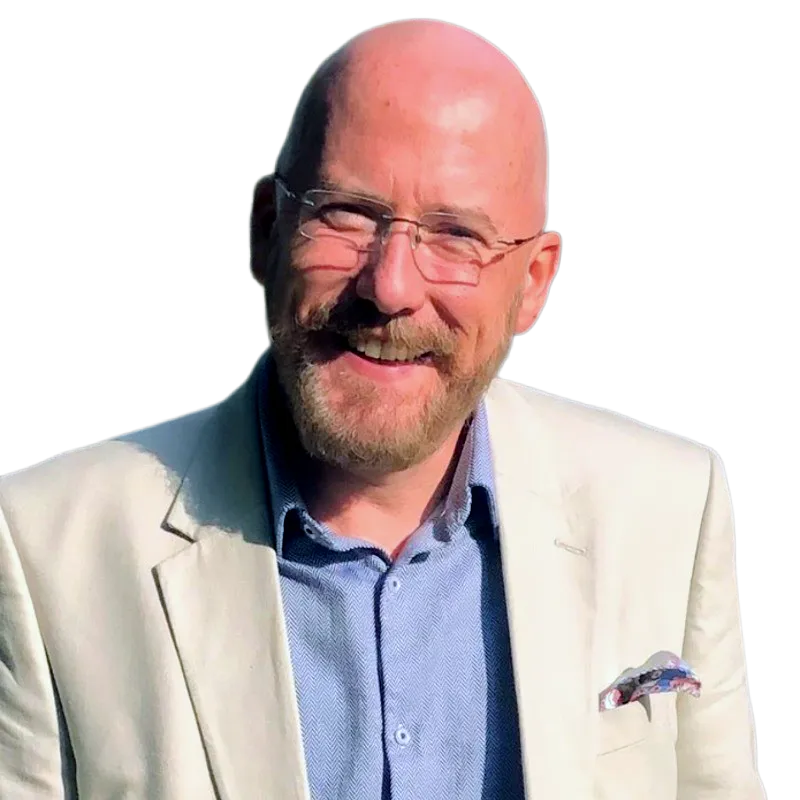
Justin Collery
The techno-overoptimist.